Four acronyms, one installation method, and a set of differences that decide compatibility, cost and risk. A plain-English orientation to the UK single-ply market.
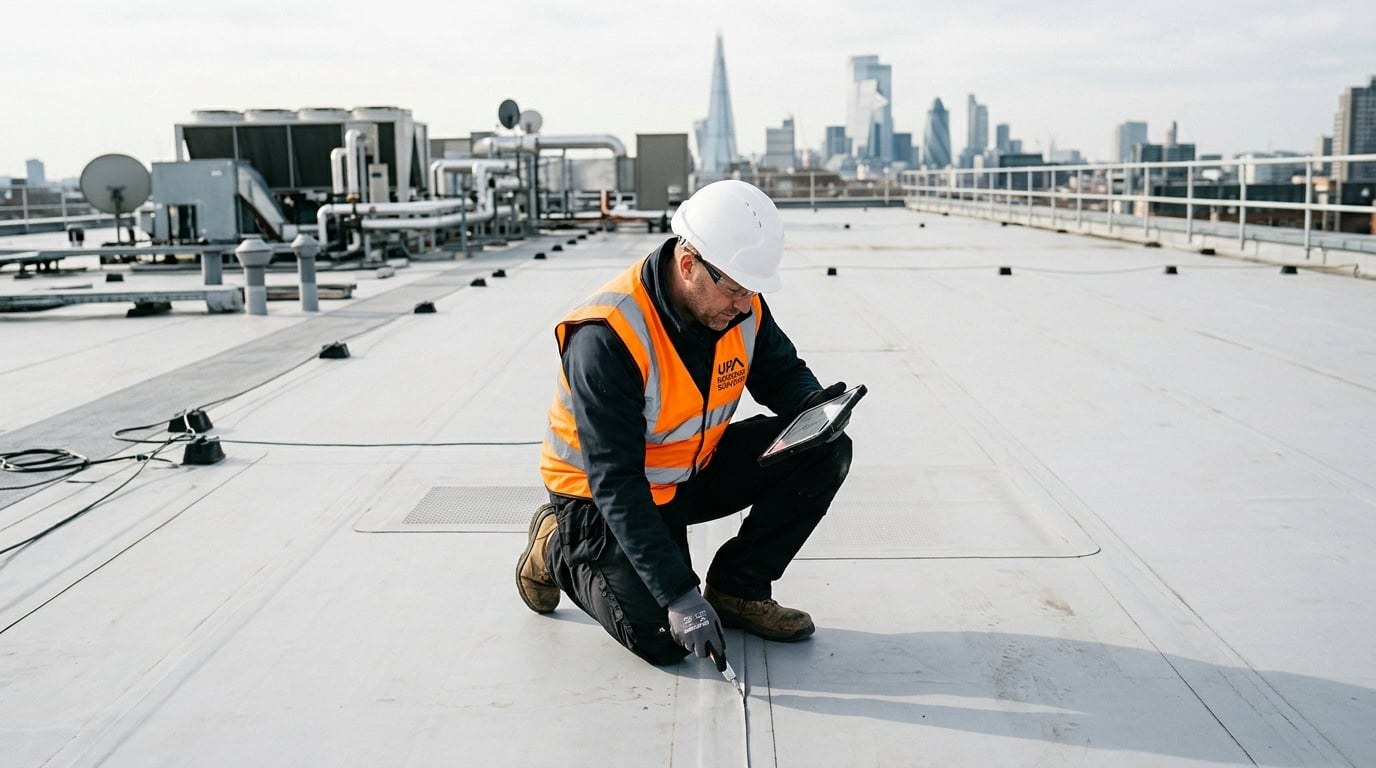
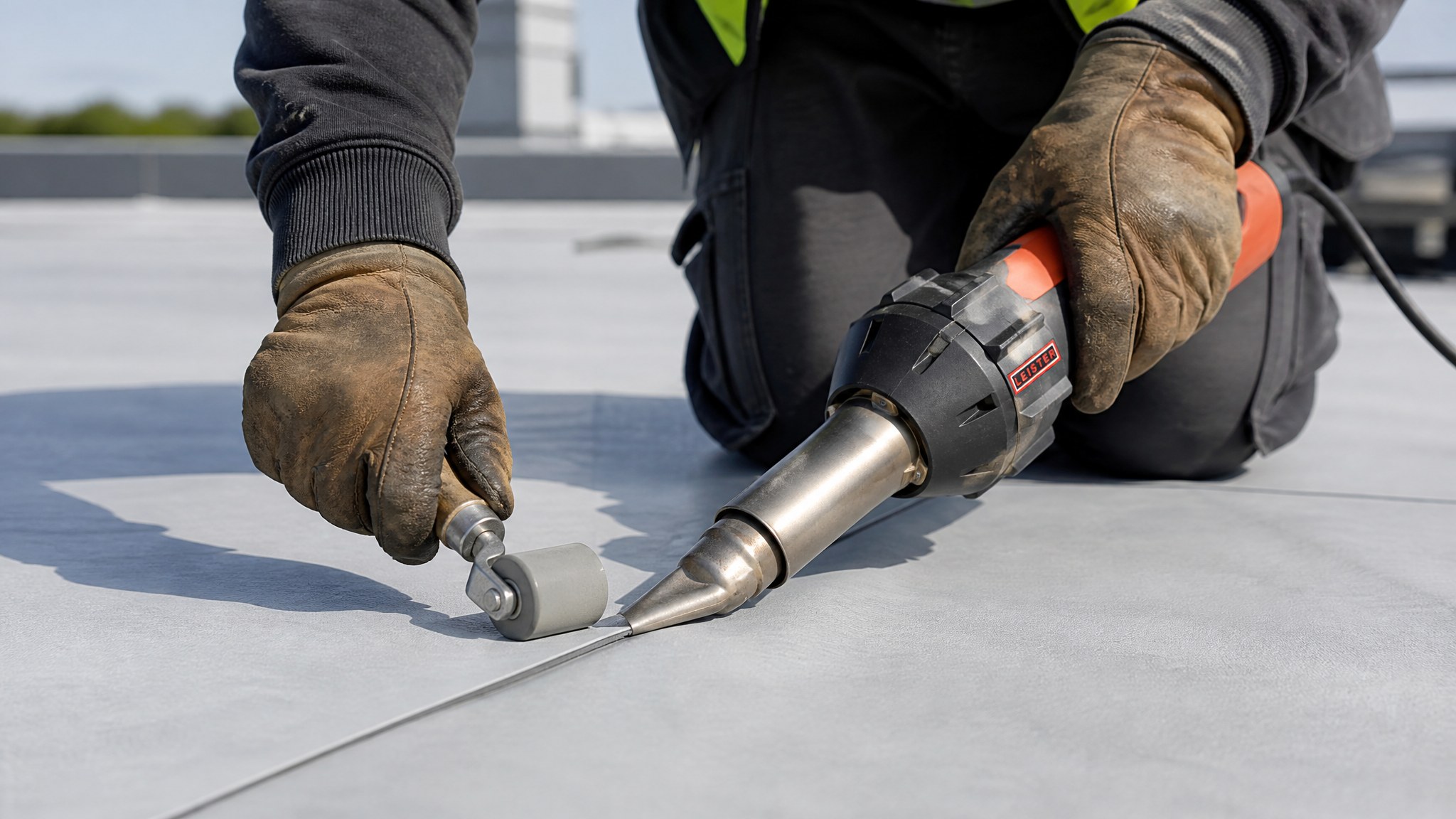
Single-ply membranes are factory-made flexible sheets rolled out across the roof and joined by hot-air welding the overlaps, so the field of the roof behaves as one continuous skin. They are lightweight, fast to install over open areas, and repairable with the same welding technology used to install them. The seam can be probe-tested on the day it is made, which is a genuine advantage over adhesive-only methods.
PVC-P
Plasticised PVC is the most mature UK single-ply family, with the deepest certification base and the widest range of preformed corners, collars and trims. Its defining constraint is compatibility: plasticised PVC is incompatible with bitumen, oils, solvents and polystyrene insulation, so contact with any of those requires a separation layer confirmed in writing by the manufacturer.
FPO and TPO
Flexible polyolefin and thermoplastic polyolefin are non-PVC sheets that avoid the plasticiser problem, which is why some certified systems permit direct contact with bitumen or polystyrene. That permission belongs to the named product, never to the acronym. The welding window is narrower than PVC, so trial welding discipline matters more, not less. TPO in particular carries a great deal of North American marketing that does not transfer to a UK proposal.
TPE
Thermoplastic elastomer sheets tend to accommodate movement and complex geometry well, at the cost of a narrower UK support base. Choose it where detailing and movement dominate; choose a more widely supported sheet where a dense schedule of certified accessories is the priority.
The acronym carries no performance meaning. Specify the manufacturer’s exact designation, thickness and backing — and refuse acronym-level equivalence in any substitution clause.
What actually drives cost
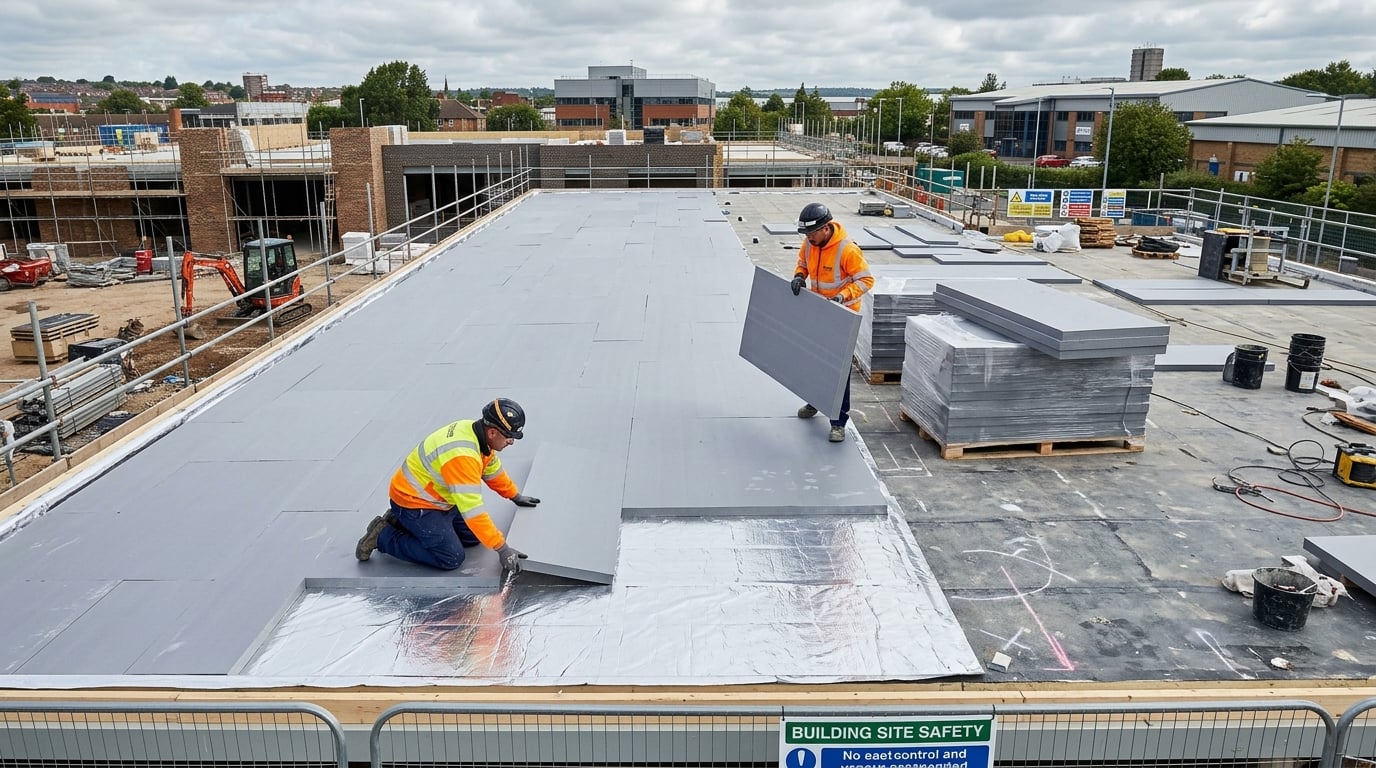
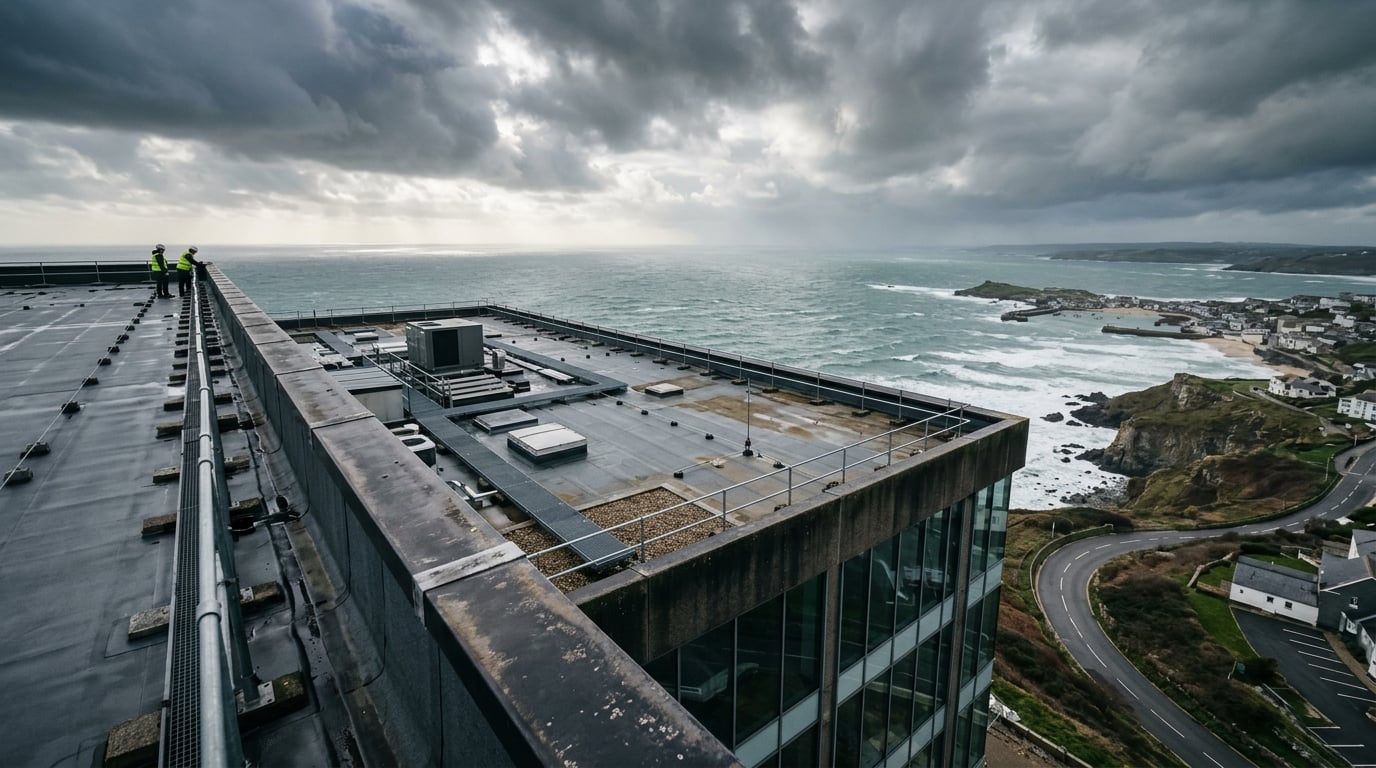
For every single-ply chemistry, cost and programme are driven by detail density and by the wind uplift calculation, not by the material price per square metre. A large open field is quick; a roof cut up by plant, upstands and penetrations can double the labour for the same area. On exposed and coastal sites, the corner and perimeter fastener schedule can dominate both price and programme regardless of which sheet you choose.