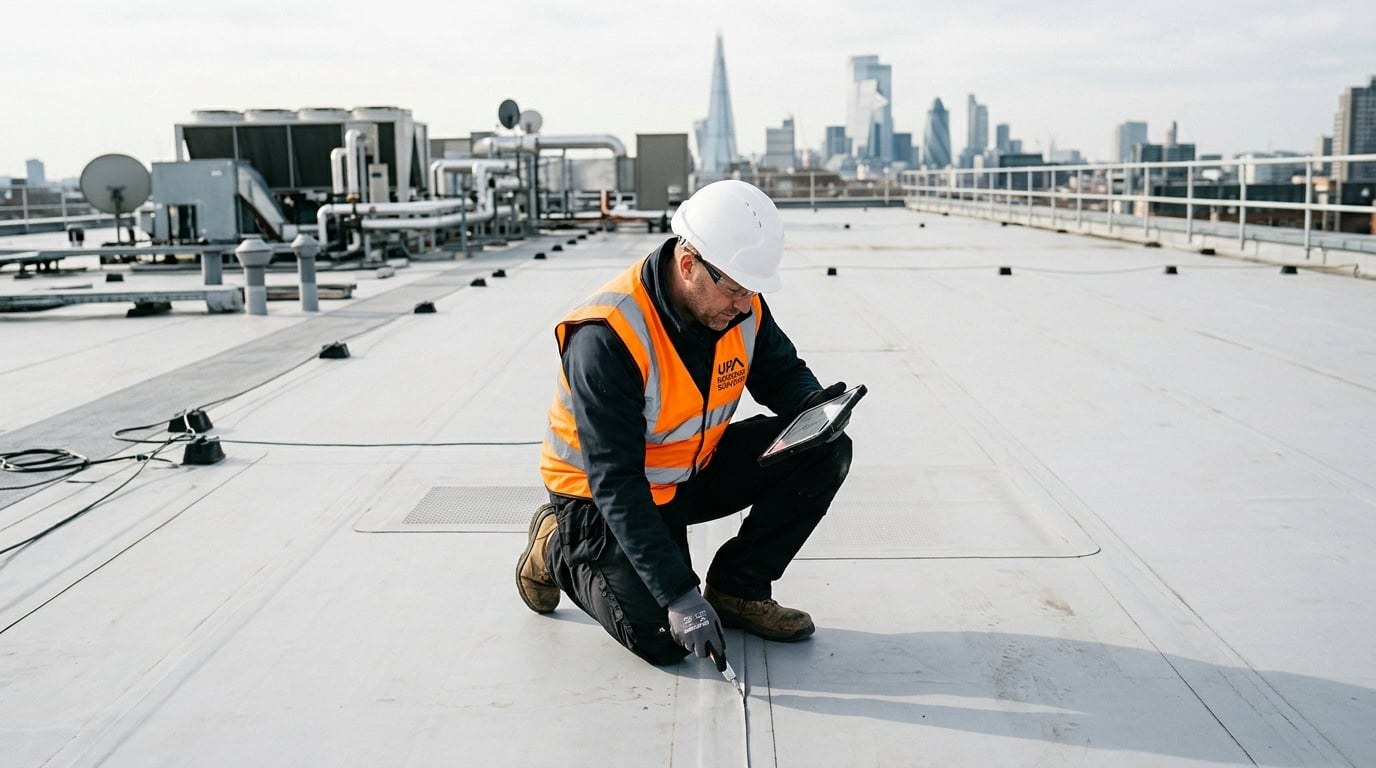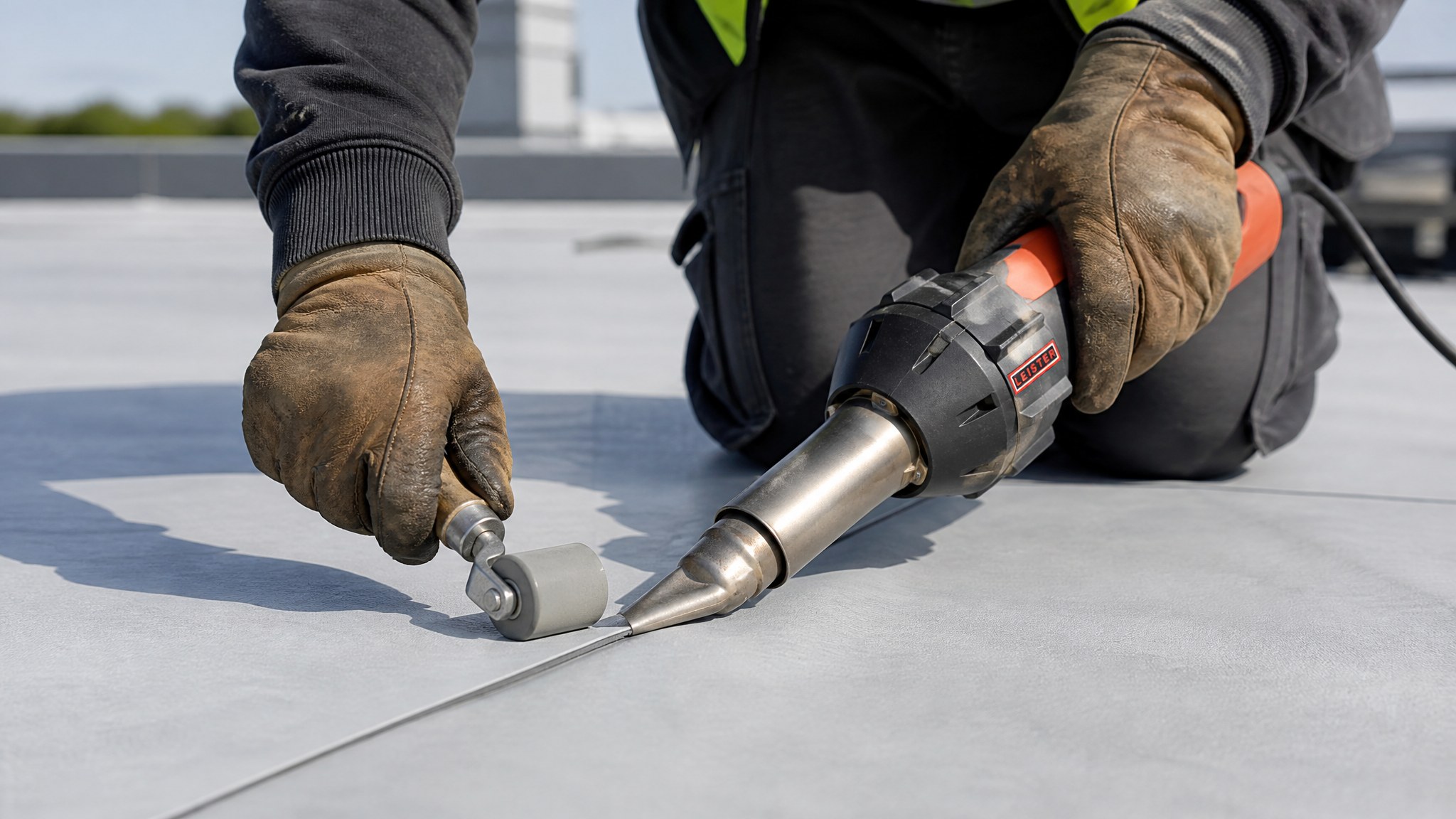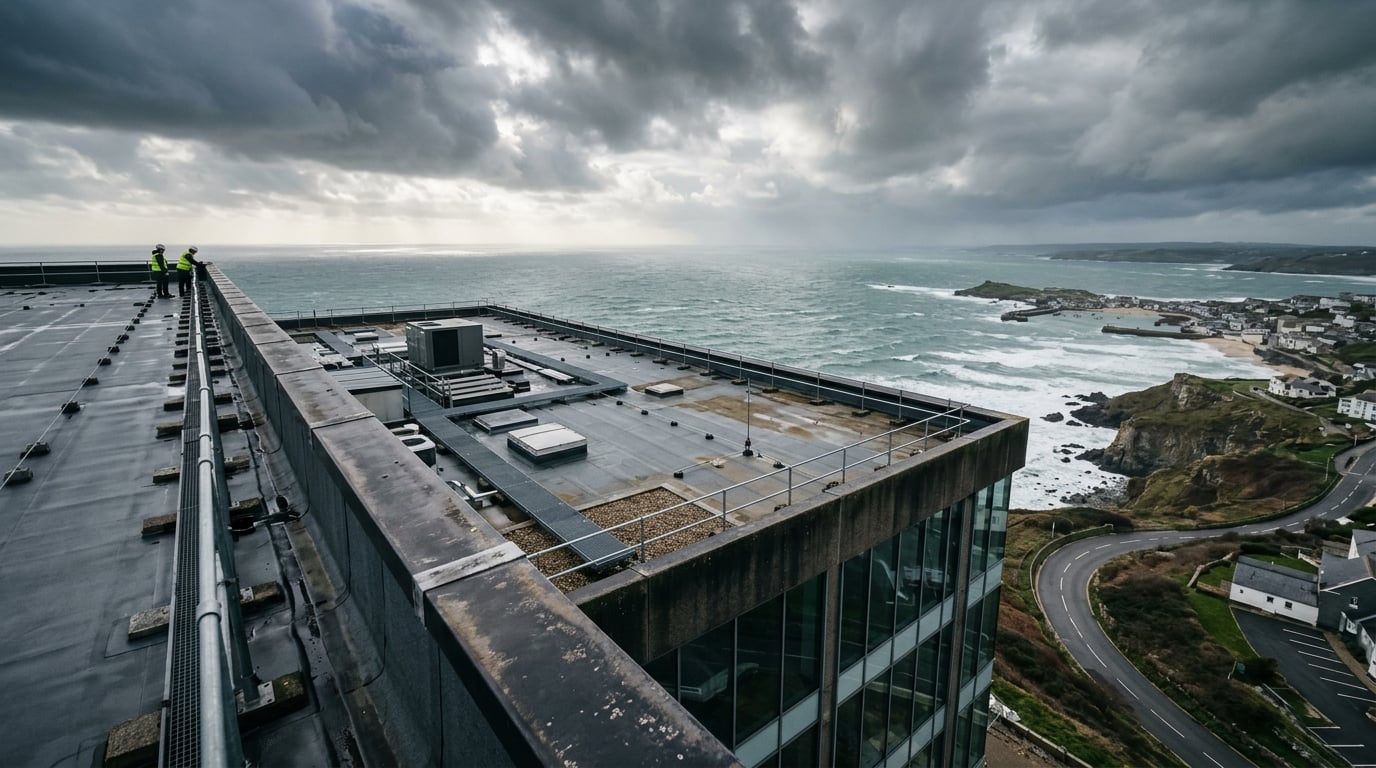
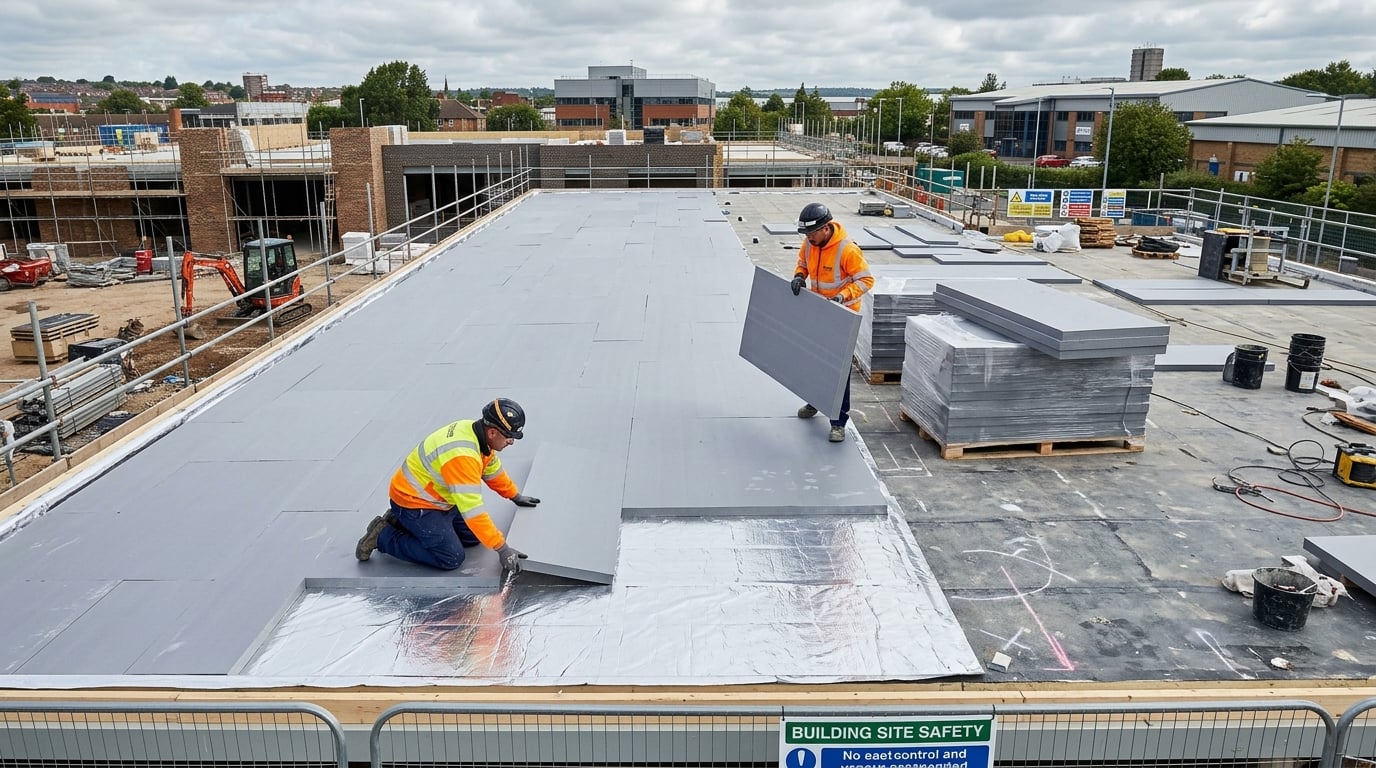
A roof is a configuration, not a chemistry. Where the insulation sits relative to the waterproofing changes the condensation risk, the detailing and the rules that apply.
People often ask which membrane to use before they have settled the far more consequential question: what kind of roof is being built. The position of the insulation relative to the waterproofing defines the assembly, and the assembly defines the condensation risk, the detailing and much of what the regulations expect.
Warm roof
In a warm roof the insulation sits above the structural deck and below the waterproofing, with an air and vapour control layer beneath the insulation. The AVCL matters more for air leakage than for diffusion, and its continuity with the wall airtightness line is what actually prevents interstitial condensation. This is the default recommended arrangement for most new UK flat roofs.
Cold roof
A cold roof places the insulation between or below the structural deck, leaving the deck cold and exposed to condensation risk. Current guidance advises against cold roof construction for flat roofs, and it should not be adopted without a deliberate, evidenced condensation design rather than as a default.
Inverted roof
An inverted or protected-membrane roof reverses the order: the waterproofing is laid directly on the deck and the insulation sits above it, held down by ballast, paving or a landscaped build-up. It protects the membrane from thermal cycling and mechanical damage, but it demands insulation rated for that exposure and a water flow reducing layer, and it complicates leak detection because the membrane is buried.
Falls, drainage and the fixing schedule sit outside the membrane specification — but they decide whether the membrane ever gets the chance to perform.
Whichever configuration you choose, the membrane’s scope ends at trims, outlets, upstands and penetrations. The design of falls, the sizing of drainage and the fastener schedule are separate responsibilities, and they are where most avoidable failures begin.